

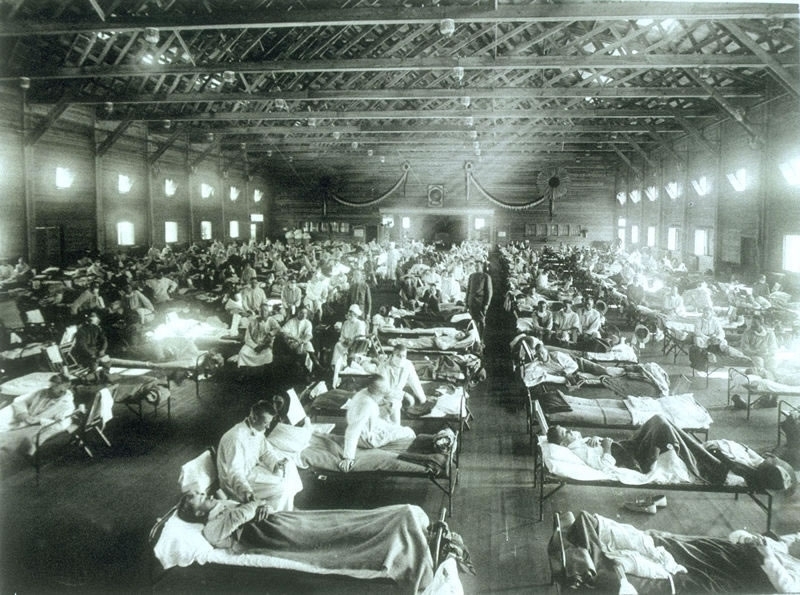

Managing demand for planned health care is described in this report as a “wicked problem” – demand for healthcare is outpacing capacity to meet it.
Health economies have tried various approaches to managing demand; referral management centres, expanded roles, direct access amongst others. But the evidence base has been mixed, of variable quality and sometimes conflicting findings.
This synthesis of evidence sets out to understand what works but with a particular focus on context, to understand what works, in what settings and why.
Methods
This is a realist synthesis, which is a theory-based approach developed (by one of the authors) in recognition of the complexity of change in healthcare systems. This method recognises that interventions will vary from one setting to another, including the components, the local context and the factors which influence outcomes. The realist approach aims to move beyond a simple judgment of whether or not an intervention works (which is overly simplistic for complex change interventions that involve changing behaviours) and seeks to gain a better understanding of how and why an intervention might work, in what circumstances and to what extent.
The authors conducted a literature search in two phases: initially exploring the “ideas literature” to extract the underlying theories of change behind demand management and then identifying relevant empirical studies on demand management interventions.
Throughout the study, the team engaged with a range of stakeholders, including patient groups.

Results
The authors share findings on four specific approaches to demand management:
- Referral management centres
- GPs with special interest
- Direct access
- Guidelines
There’s simply so much information in the final report, that I can’t do it justice in this short blog. Some of the key messages which resonated with me included:
- The unintended consequences of interventions such as workarounds, where clinicians haven’t been involved in the design and therefore don’t fully trust the new system;
- Variations in how expanded GP roles have been implemented, resulting in mixed evidence;
- Some benefits of direct access for ruling out diagnoses, but some risks of overdiagnosis for differential diagnosis tests;
- Various inherent tensions within the system, such as:
- Patient choice versus generic guidelines
- Disease-focused guidelines that don’t address multimorbidity
- Blanket recommendations in an environment of financial challenge.

Conclusions
The authors emphasise there are no silver bullet solutions out there. The solutions that do seem to work have been adaptive, developing to fit local context and involved significant effort. However, they have come up with a series of design principles and several examples which should offer useful learning to local health economies designing change programmes.

Additionally, recognising that few practitioners may read the entire report, the authors have helpfully set out a framework specificially for practitioners to support their thinking through the implications:
- What (exactly) is the problem?
- What are the options?
- Will reorganisation work?
- Can intermediaries do the trick?
- Will direct access to test results reduce excess referrals?
- Will guidelines be followed?
- Can productive change be accelerated?
A collaborative approach is needed to properly work through these implications and the authors suggest the group model building approach as a means to achieving this.
Commentary
The emphasis on “hard-won adaptive local solutions” and the prompts listed above suggests to me there are key elements (robust data and analysis, engagement, theory of change), which need to be in place to effectively design, implement and evaluate demand management.

Commissioners may wish to consider
- How well do we understand the problem?
- What are the trends – generally and more specific to local communities?
- How can we test our underlying assumptions?
- What might help or hinder change locally?
- What outcomes are we planning to achieve and how can we test these?
- How are we involving all the potential stakeholders (patients, practitioners, providers (NHS, public sector, third sector, independent sector etc) in the design, implementation and evaluation?
Links
Primary paper
Pawson R, Greenhalgh J and Brennan C (2016) Demand management for planned care: a realist synthesis. Health Services and Delivery Research, 4 (2).
Photo credits
- U.S. Army photographer – Army.mil, Public Domain
- Toffehoff CC BY-SA 2.0
- Nic McPhee CC BY-SA 2.0
- Karabo CC BY-SA 3.0
- Peter05031960 CC BY-SA 3.0







BibSonomy :: url :: What works to manage demand in planned care?
10 years agoHampshire Healthcare Library Service
10 years agoMsLaToyah
10 years agoYogibear311
10 years agoMaverickWonk
10 years agoCommissionElf
10 years agoOfficialNHSC
10 years agoali_pals
10 years agoCommissionElf
10 years agograhamaphillip7
10 years agok_a_murray
10 years agoCumbrianeuro
10 years agojmcefalas
10 years agoNorthSn
10 years agokennygibsonnhs
10 years agoanniecoops
10 years agoJanice Salmon
10 years agoCommissionElf
10 years agoCommissionElf
10 years agoCommissionElf
10 years agoCommissionElf
10 years agoCommissionElf
10 years agoThe Commissioning Elf
10 years agoEvInsights
10 years agoBPSOfficial
10 years ago