

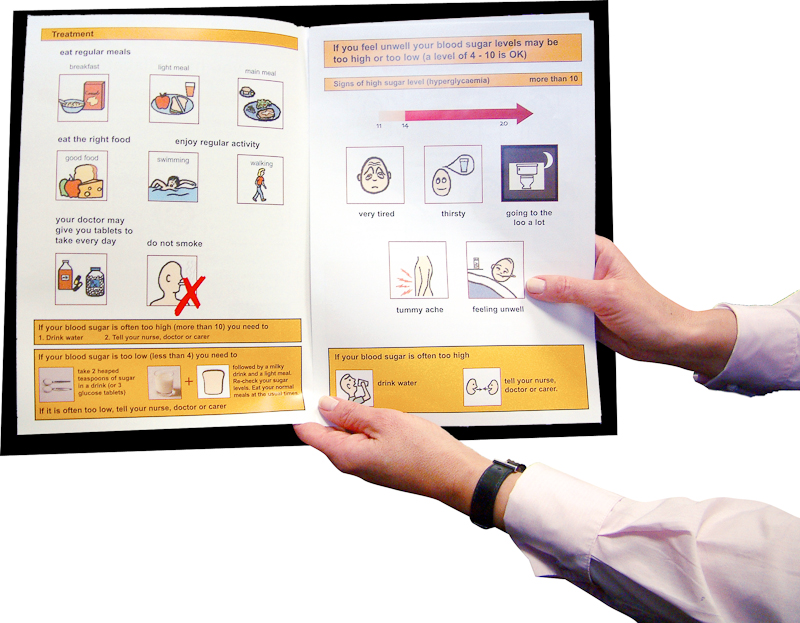

Individuals with learning disabilities have a history of experiencing health inequalities when compared to the general population (Emerson et al 2010, Sutherland et al 2002). This is significant considering the high levels of co-morbidity experienced by this client group compared to general population (i.e. they are more likely to experience a number of health related problems due to having a learning disability).
This has continued to remain an area of concern amongst those working with individuals with a learning disability, as access to appropriate assessment and treatment also remains poor (Department of Health, 2009). A more practical approach has been implemented by the National Health Service (NHS) to focus on bridging the health gap that exists for this client group.
This has included the development of a special scheme for health checks for individuals with a known learning disability within England. NHS Wales first developed a health check for individuals with learning disabilities in 2006 and this was soon followed by an incentivised (monetary) scheme by NHS England in 2008-09 which was named the LD-DES (Learning Disability Directed Enhanced Service).

Methods
The study being reviewed is a longitudinal cohort study to determine whether the incentivised opt in scheme (LD-DES) was successful at improving the healthcare of individuals with a known learning disability in England within its first three years. Electronic data gathered by the Health Improvement Network Primary Care Database (THIN) was collected and assessed using a multifunctional logistical regression in order to ascertain a whether opting in to the incentivised scheme produced favourable health outcomes for this client group.
This type of statistical analysis is often used in situations where one wishes to find out how much an involvement in a given variable can affect the likelihood of a given outcome occurring. Strict inclusion criteria were set for GP practices taking part in the study. patient eligibility in respect to learning disability had to be previously established i.e. individuals with a “known” learning disability.
GP practices also had to demonstrate a pre-established rate of data recording per annum before being included in the study. These included the following data per patent, per year before the 1st January 2009 (thus cut off was set as it coincides with the introduction of the LD-DES):
- One medical record
- One additional health data record
- Two prescription records
In addition to this data, a measure of deprivation of liberty had to be completed for at least 80% of patients (Townsend neighbourhood deprivation scores). This measure is a standard measure completed by GP’s for the requirements of Health Improvement Network Database (THIN).
The 80% cut off figure was set to ensure that all patients included in the study were representative of the GP practice as a whole. The authors do not state whether a certain score was required on this measure for the purposes of the current study. The social circumstances of patients is an important factor because the researchers were interested in whether this could impact upon individuals attending GP practices for health checks.
Results
The study found that those who took part in the incentivised scheme completed a higher number of health checks compared to those in non-incentivised practices including ordering blood tests for haemoglobin and cholesterol.
The incentivised practitioners also offered a higher frequency of checks on general health including hearing and vision and made more referrals to secondary care.
A higher number of health action plans (HAP’s) were also completed for patients within the incentivised practices. In addition, the identification of new health conditions was higher for thyroid and gastrointestinal disorders in the incentivised practices.
Conclusions
The cohort study clearly shows that being offered a monetary “incentive” can lead to GP’s conducting targeted specific health care assessments for individuals with learning disabilities. It is therefore a reasonable assumption that this could in turn lead to better identification of physical health issues and is a step towards reducing the historical health inequalities experienced by this client group.

Strengths and Limitations
This is a longitudinal cohort study using a robust statistical analysis of a large volume of data. The authors cite that they are aware of some methodological weaknesses in the study including the way pre-existing data was used to assign participants to groups in the study and the fact that some types of learning disability were omitted due to the methods employed in the study i.e. those with Asperger’s Syndrome.
The authors cite that to avoid the unnecessary exclusion of eligible patients, they used a coding system from a previous project to identify eligible patients. The codes were used to identify patients with genetic conditions known to be associated with learning disability and disorders where the majority of patients have a learning disability (over 60%).
For this reason the authors state that Asperger’s syndrome was excluded. However; this ‘cut off’ is not absolute. There is research to suggest that prevalence of learning disabilities in individuals with Autism and Asperger’s syndrome can range from 15-84% (Emerson & Baines 2010).
This means that a significant proportion of patients with Asperger’s syndrome and an additional learning disability may have been excluded from the current study. This is also significant as the majority of individuals with Asperger’s are living independently in the community and this may have implications for their ability to attend for health checks and get the health care that they require.
Another issue is that the LD-DES scheme does not use standardised training for delivery of health checks and therefore we need to be cautious of differences in service delivery that may have occurred between GP practices and indeed between individual GP’s within practices. We also need to question whether “Learning Disability” can be quantified for the purposes of research of this type and scale.
Although I appreciate that the volumes of data required mean that a more qualitative approach would be difficult, it means that the focus remains on having a ‘health check completed’ as a generic exercise, rather than ensuring a more person centred approach to health assessments in this client group i.e. the type of health assessments undertaken, frequency and follow up.
The study focuses on discrete health diagnoses and makes little reference to a more holistic picture for example, individuals with suspected dementia who require specific consideration of differential diagnoses such as thyroid functioning and depression. In addition, the role of other agencies in conducting health assessments with GP’s has not been mentioned e.g. CTPLD nursing and their role in helping to develop Health Action Plans with GP’s.

Summary
This study has demonstrated a clear link between incentivised health assessments in primary care and increased frequency of health checks completed for individuals with a learning disability. While we cannot deny the benefits of having an incentive because the scheme has clearly made a difference in this area. However; it is a shame that an incentivised scheme is required at all. Bridging the gap in respect to Health inequalities in individuals with a learning disability is not just about having the required medical investigations, but how the results are managed and the care that individuals receive after any possible assessment/diagnosis.
Taking a purely ‘nominal’ approach to completing health checks does not fully take into account the many complexities including comorbidity and differential diagnosis that are inherent aspects of assessing health needs in this client group. It is this approach that will make for a truly person centred health checks for individuals with a learning disability.
Links
Buszewicz, M., Welch, C., Horsfall, L., Nazareth, I., Osborn, D., Hassiotis, A., Glover, G., Chauhan, U., Hoghton, M., Cooper, S.A, Moukster,G., Hithersay,R., Hunter, R., Heslop, P., Courtenay,K. & Strydom, A. (2014) Assessment of an incentivised scheme to provide annual health checks in primary care for adults with intellectual disability: a longitudinal cohort study. Lancet Psychiatry, 1, 522-30 [abstract]
References
Emerson, E., Baines, S. (2010). Health inequalities and people with learning disabilities in the UK: Durham, Improving Health & Lives, Learning Disabilities Observatory.
Sutherland, G., Couch, M.A., Iacono, T. (2002). Health issues for adults with developmental disability. Research in Developmental Disabilities, 23, 422-45.
Department of Health (2009) Valuing People Now: a new three-year strategy for people with learning disabilities. London, The Stationery Office.





Jen Shrek
11 years agoSteve Hardy
11 years agokentautistic
11 years agoMark_Sheldon
11 years agoHampshire Healthcare Library Service
11 years agoJohnTurnbull20
11 years agoHHLibService
11 years agoSCIE_sco
11 years agoTraceyPockett
11 years agobarbarhubarb
11 years agoLearningDisElf
11 years agoJohnTurnbull20
11 years agoHorshamPsychol
11 years agoLonDownS
11 years agoitsanidealworld
11 years agoautismcornwall
11 years agohdhunter6
11 years agoLearningDisElf
11 years agoRos_Hith
11 years agoFrankCurtisLib
11 years agohdhunter6
11 years agoJen Shrek
11 years agoSteve Hardy
11 years agoThe Learning Disabilities Elf
11 years agobjpren
11 years agoMental_Elf
11 years agoMartingaughan
11 years ago