

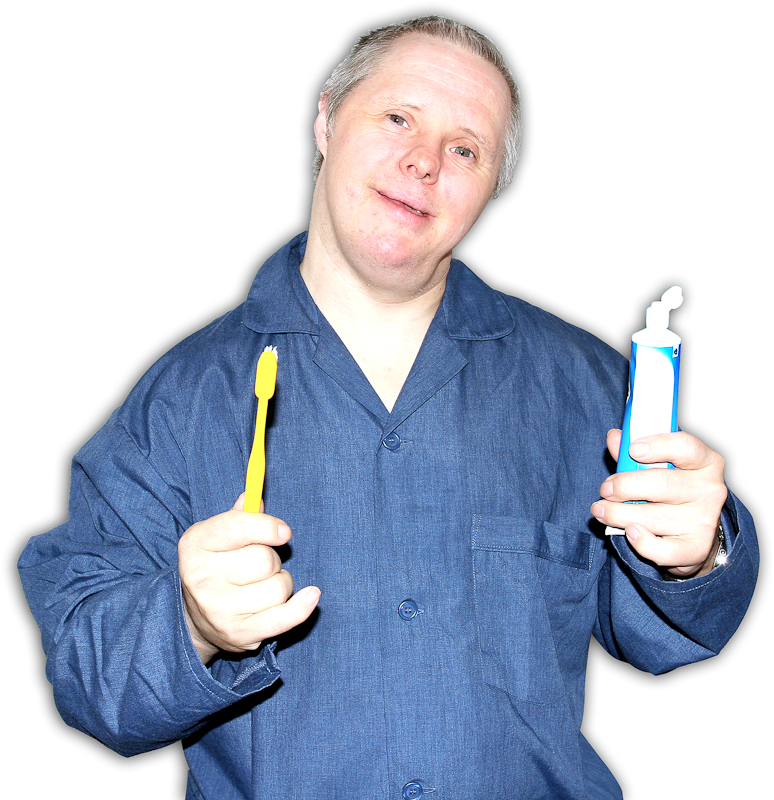

People with learning disabilities are more likely to have tooth decay, loose teeth, have gum disease, show higher levels of untreated disease and also have a larger number of extractions than those without disabilities, although evidence does exist to suggest that well-performed preventive procedures can prevent progression of dental disease and reduce tooth loss.
The researchers in this US study were interested in whether or not a training programme for support workers could improve their support in oral hygiene of the people they support The researchers used a quasi-experimental one-group pretest/posttest design with repeated measures.
They worked with a number of support staff who went through an educational programme. Firstly they demonstrated oral hygiene skills on each other and were scored whilst doing this by a trained observer. They also completed an oral hygiene compliance survey.
The researchers then carried out a three month follow-up which included the demonstration of oral hygiene skills and a repeat of the compliance survey.
They used paired-sample t-tests to test oral hygiene knowledge. These tests compare the means of two variables and enable researchers to see if the average difference is significantly different from zero and so prove a statistically significant outcome. These tests did show a statistically significant improvement from pretest to posttest and from pretest to three-month posttest They found that oral hygiene skills and compliance had improved.
The authors conclude that their results show
evidence that caregiver education improves knowledge, skill, and compliance in oral hygiene.
Effectiveness of a Caregiver Education Program on Providing Oral Care to Individuals with Intellectual and Developmental Disabilities, Fickert N & Ross D in Intellectual and Developmental Disabilities: June 2012, Vol. 50, No. 3, pp. 219-232.





Ros Davies
13 years agoMichelle Slater
13 years ago