

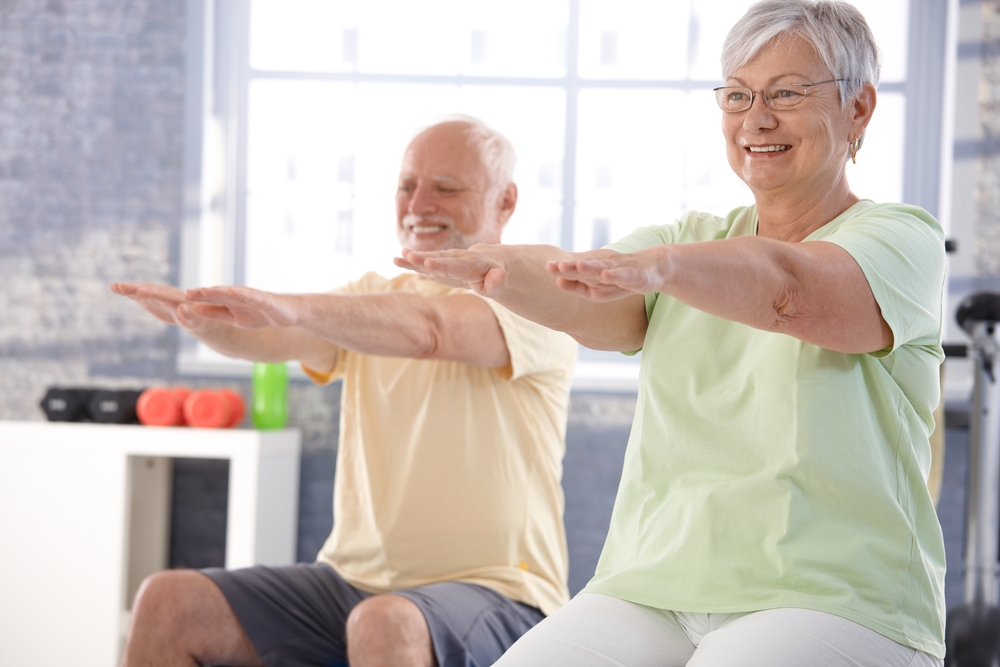

As you know from many of our previous blogs the Elves are very positive about doing physical activity as there is much evidence to show that physical activity has a range of benefits and this includes benefits for for older people.
We know that exercise programs can prevent falls and increase strength. We have also written two Cochrane reviews on exercise for improving balance for older people and exercise for preventing and treating osteoporosis in postmenopausal women.
However, in the woodland we have noticed that some older elves’s adherence to exercise declines over time. We wondered how people monitored and measured adherence to exercise and if any factors influence people’s adherence to exercise programmes. We found a recent systematic review that did just this.
Here’s what they did
The authors searched five databases: Medical Literature Analysis and Retrieval System Online (MEDLINE), Excerpta Medica Database (EMBASE), Scientific Electronic Library (SciELO), Latin American Literature in Health Sciences (LILACS) and Physiotherapy Evidence Database (PEDro) the date range was not reported. The included studies involving older people undertaking exercise programs and including measures of adherence, adherence rates and factors associated with adherence. Two reviewers independently extracted the relevant data but no information was given on how studies were quality assessed.
Here’s what they found
- Nine studies were included and sample sizes ranged from 52 to 293.
- The most common adherence measures were:
- proportion of participants completing exercise programs (i.e., did not cease participation, four studies, range 65 to 86%),
- proportion of available sessions attended (five studies, range 58 to 77%)
- average number of home exercise sessions completed per week (two studies, range 1.5 to 3 times per week).
- Adherence rates were generally higher in supervised programs.
- The person-level factors associated with better adherence included:
- demographic factors (higher socioeconomic status, living alone);
- health status (fewer health conditions, better self-rated health, taking fewer medications);
- physical factors (better physical abilities);
- psychological factors (better cognitive ability, fewer depressive symptoms).
The authors concluded
Older people’s adherence to exercise programs is most commonly measured with dropout and attendance rates and is associated with a range of program and personal factors.
The Musculoskeletal Elf’s view

This review raises a number of important issues. Firstly, there is no general method of measuring adherence to exercise and often studies examining the effectiveness of exercise fail to measure or report adherence at all. It would appear to be easier to measure adherence when participants are part of a supervised group but more difficult when programmes are community-based and self-supervised. The development of digital health and mobile technology such as smart phones and apps may help with this in the future.
Exercise prescribers should be more aware of some of the person-level factors identified in this review when developing, delivering and monitoring exercise programmes for older people.
What do you think?
- Do you monitor adherence to exercise programmes? What method do you use?
- Do you take into account the person level factors identified in this review?
Send us your views on this blog and become part of the ever expanding Musculoskeletal Elf community. Post your comment below, or get in touch via social media (Facebook, Twitter, LinkedIn, Google+).
Links
Picorelli AM, Pereira LS, Pereira DS, Felício D, Sherrington C. Adherence to exercise programs for older people is influenced by program characteristics and personal factors: a systematic review. J Physiother. 2014 Sep;60(3):151-6. doi: 10.1016/j.jphys.2014.06.012. Epub 2014 Aug 3. [abstract]
Gillespie LD, Robertson MC, Gillespie WJ, Sherrington C, Gates S, Clemson LM, Lamb SE. Interventions for preventing falls in older people living in the community. Cochrane Database of Systematic Reviews 2012, Issue 9. Art. No.: CD007146. DOI: 10.1002/14651858.CD007146.pub3. [abstract]
Howe TE, Rochester L, Neil F, Skelton DA, Ballinger C. Exercise for improving balance in older people. Cochrane Database of Systematic Reviews 2011, Issue 11. Art. No.: CD004963. DOI: 10.1002/14651858.CD004963.pub3. [abstract]
Howe TE, Shea B, Dawson LJ, Downie F, Murray A, Ross C, Harbour RT, Caldwell LM, Creed G. Exercise for preventing and treating osteoporosis in postmenopausal women. Cochrane Database Syst Rev. 2011 Jul 6;(7):CD000333. doi: 10.1002/14651858.CD000333.pub2. [abstract] [previous blog]




RRIO_news
10 years agopaintoolkit2
10 years agoMSK_Elf
10 years agoProfTraceyHowe
10 years agoAGILEChair
10 years agoDouglasNatusch
10 years agojenniferprsn
10 years agojenniferprsn
10 years ago_antoniamarsh
10 years agoHortonMeg
10 years agoPhentermineme
10 years agoJo_KeeleIPCHS
10 years agoCMesagno
10 years agoBaileyDrennan
10 years agoEvidenceMatters
10 years agoActiveAgingJnx
10 years agoActiveAgingJnx
10 years agodracinthiagep
10 years agoexerciseworks
10 years agoexerciseworks
10 years agoActiveAgingJnx
10 years agoProfTraceyHowe
10 years agoMSK_Elf
10 years agoEvidenceMatters
10 years agoMSK_Elf
10 years agoProfTraceyHowe
10 years agoCECLibrary
10 years agoPhysioUniverse
10 years agoMSK_Elf
10 years agoAbiodun T. Adefolarin
11 years ago