



A friend of the Elf has ankylosing spondylitis, a chronic inflammatory rheumatic disease that affects mainly the skeleton, causing inflammation of the spine, but can also affect the peripheral joints, eyes, bowel and skin. They have also been suffering with their mouth health.
The Elf’s friend wondered if there is any connection between the two. On looking at the evidence we found this recent review by a group in Aberdeen, their aim was to examine the link between ankylosing spondylitis and periodontitis.
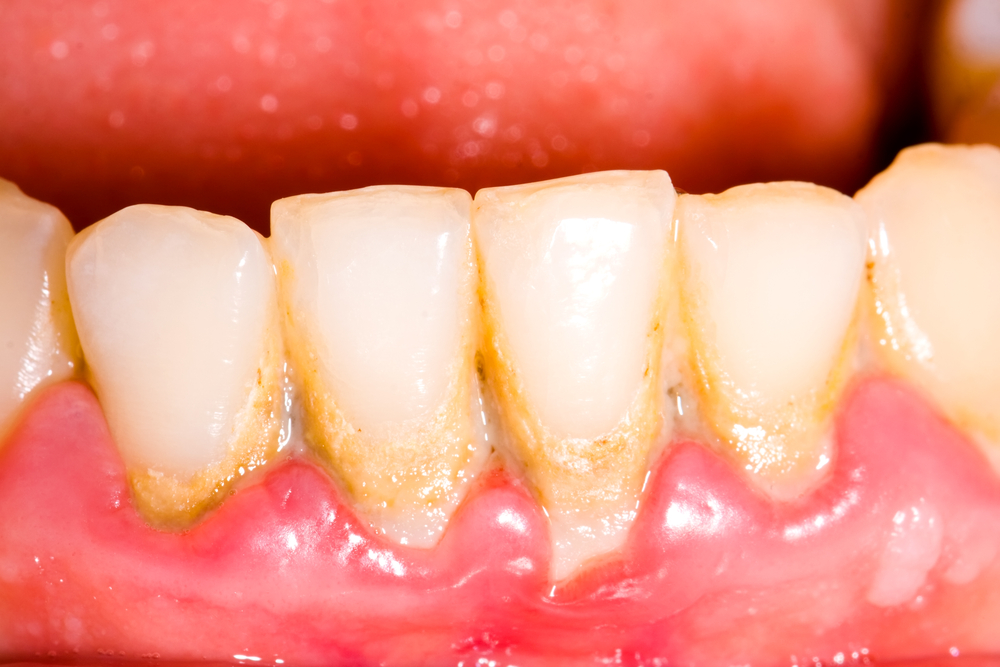
Periodontitis is a loss of the periodontal ligament which leads to loss of connective tissue and alveolar bone. Peridontitis can follow an immune response to the long term presence of plaque bacteria. Periodontitis may not have any symptoms but if left untreated it can lead to tooth loss.
Here’s what they did
The authors searched Medline, Embase, AMED, CINAHL, Web of Science and Google Scholar to March 2014 for reviews or reviews or observational studies of cross-sectional, case–control or cohort design. Randomized controlled trials, case reports and case series were excluded. There were no restrictions on publication date or publication status. Randomized controlled trials, case reports and case series were excluded. There were no restrictions on publication date or publication status. Two authors independently reviewed each study.
Participants of the studies had to be diagnosed with AS based either on recognized international criteria or on clinical diagnosis by a rheumatologist.
Prevalence of periodontal disease had to be reported in AS patients and also available for a non-AS population.
Here’s what they found
- Six case–control studies were included in the review.
- Study size ranged from 90 to 40 926 participants.
- The prevalence of periodontitis ranged from 38% to 88% in AS patients and from 26% to 71% in controls.
- As there was low-level heterogeneity (I2 = 13%), using fixed effects analysis the overall pooled estimate of the odds ratios for periodontitis was 1.85 (95% CI 1.72, 1.98).
- The only significant difference was found for Bleeding On Probing [using a random effects model, the combined mean difference between cases and controls was 14.05 (95% CI 4.16, 23.94), P = 0.005].
- There was no evidence of publication bias.
The author’s conclusions
Meta-analysis showed an important (almost double) and statistically significant risk of AS associated with periodontitis.
The authors also comment that it appears that DMARDs used for the treatment of chronic inflammatory rheumatic diseases may affect the risk of periodontitis.
The Musculoskeletal Elf’s view

The authors of this review suggest that the small number of studies with important methodological weaknesses. They recommend that there is a need for a study with sufficient statistical power to detect the desired effect size, taking into account potential confounding factors and using validated measures of AS and periodontitis.
So what is statistical power? It is ability of a study to demonstrate an association or causal relationship between two variables. By convention, 80% is an acceptable level of power. This means that there is 80% chance of ending up with a p value of less than 5% in a statistical test (i.e. a statistically significant treatment effect). If the statistical power of a study IS low, the study results will be questionable (the study might have been too small to detect any differences).
What is effect size? The effect size can be just the difference between the mean values of the two groups but there are other ways of calculating this. In general terms the larger the effect size, the greater is the impact of an intervention.
What do you think?
- Do you consider any association between ankylosing spondylytis and mouth health?
- Were you aware of periodontitis?
Send us your views on this blog and become part of the ever expanding Musculoskeletal Elf community. Post your comment below, or get in touch via social media (Facebook, Twitter, LinkedIn, Google+).
Links
- A possible link between ankylosing spondylitis and periodontitis: a systematic review and meta-analysis. Ratz T et al. Rheumatology (Oxford). 2015 Mar;54(3):500-10. doi: 10.1093/rheumatology/keu356. Epub 2014 Sep 10.
- Statistical power. Bandolier.
- Effect size. Bandolier





Gloria
8 years agoSusie
8 years agojulie taylor
8 years agoTemitope Adefolarin
10 years agoSean Purdy
11 years agoSean Purdy
11 years agoUoAEpi
11 years agoASIntFed
11 years agoUAberdeenEpi
11 years agoclarenras
11 years agoclarenras
11 years agokarenmayphysio
11 years agoNASSchiefexec
11 years agoMSK_Elf
11 years agoProfTraceyHowe
11 years agoNASSchiefexec
11 years agoMSK_Elf
11 years agoNASSchiefexec
11 years agoTheDentalElf
11 years agoProfTraceyHowe
11 years agoMSK_Elf
11 years agoSpineHealth
11 years agoflyerLPA
11 years agoTheDentalElf
11 years agoMSK_Elf
11 years agoProfTraceyHowe
11 years agoHHLibService
11 years agoTheDentalElf
11 years agoadvmuscphysio
11 years agoTemitope Adefolarin
11 years agoNASSexercise
11 years agoMSK_Elf
11 years agoProfTraceyHowe
11 years agoUAberdeenEpi
11 years agoUoAEpi
11 years agoProfTraceyHowe
11 years agoMSK_Elf
11 years agonews4Glasgow
11 years agoMSK_Elf
11 years ago