

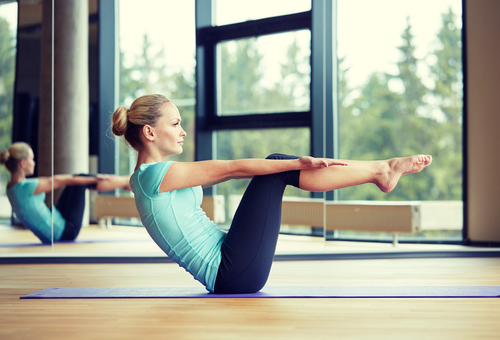

Pilates has been around since 1920, and now people finally seem to be catching on to it! It might have taken almost 100 years to happen, but it seems a lot more patients and physiotherapists are talking about it.
So, the burning question – does it help one of our most commonly seen conditions: chronic, non-specific low back pain (CLBP)? This new systematic review examined the literature to determine the effectiveness of Pilates exercises on pain and disability on CLBP.
Here’s what they did
They looked for randomized controlled trials, reviews and meta-analyses, in English language, published in the: MEDLINE-NLM; MEDLINE-EBSCO; Scopus Elsevier; Cochrane; SciELO and PLOSONE databases, using a comprehensive search strategy.
The methodological quality of the studies were rated (PRISMA) by two independent investigators, with a third reviewer available to provide consensus in areas of disagreement.
Here’s what they found
Nine review papers were included within this systematic review. Four reached no firm conclusion while five reported Pilates exercise was effective in reducing pain. None reported the Pilates method to be inferior to any other exercise regime and results from individual studies show some promise:
- When comparing Pilates exercises with a minimal intervention approach all studies (n=9) showed a reduction in pain, with six reaching statistical significance (p<0.05; 0.0001; 0.001 for pain reduction).
- In one trial, all participants received flexibility exercises plus either Pilates exercises or therapeutic exercises. Both groups improved on pain, function, general health and flexibility (VAS/Oswestry), with greater gains reported in the Pilates group.
- Comparing NSAID’s with or without a Pilates programme of exercise, the Pilates group improved with regards not only to pain and function but also reduced medication (p<0.010).
- Six studies compared Pilates exercises with other exercise programmes and found pain was significantly reduced across the board, regardless of exercise regime (p<0.05). One trial showed improvement in favour of Pilates exercises. This trial was conducted on postmenopausal osteoporotic women who were either exercising at home, or attending a Pilates class twice weekly for one year. Both groups showed significant improvements in pain, functional status and quality of life, but this was greater in the Pilates group.
- The authors analysed five studies to assess the therapeutic effect of Pilates exercises alone on those with chronic low back pain. All but one reported statistically significant reductions in pain.
The authors concluded
The consensus in the field suggests that Pilates method is more effective than minimal physical exercise intervention in reducing pain.
However, due to variance in methodology, populations, interventions and outcome measures, further studies are needed to better understand the short and long term effects of Pilates exercise in CLBP.
The Musculoskeletal Elf’s view

The authors conducted a comprehensive search of the literature, but CINAHL was not included in their search. Only studies published in English were included, and whilst practical, may have introduced bias. In the majority of the studies, population demographics or specifics of interventions were not reported, which unfortunately affects the extent to which the results can be applied clinically, unless the reader locates the original articles themselves.
While evidence shows Pilates exercises are clinically useful in significantly reducing CLBP pain, we cannot say that Pilates exercises are any better, nor any worse, than any other exercise intervention.
What do you think?
Send us your views on this blog and become part of the ever expanding Musculoskeletal Elf community. Post your comment below, or get in touch via social media (Facebook, Twitter, LinkedIn, Google+).
Links
Patti, A., Bianco, A., Paoli, A., Messina, G., Montalto, M. A., Bellafiore, M., … & Palma, A. 2015, ‘Effects of Pilates Exercise Programs in People With Chronic Low Back Pain: A Systematic Review’, Medicine, Vol.94, no.4, e383 [Full text]



Mairi Forsyth
8 years agoKatie Knapton
10 years agosydIBJR
11 years agoCochraneMSK
11 years agoSarah-Louise Quinnell
11 years agoCahprOxford
11 years agoIlona Malkauskaitė
11 years agoPamela Waddell
11 years agoLyndsey C Whitson
11 years agoJill Oates
11 years agoLouise Smith
11 years agoAnne Marie Reid
11 years agoClaire Mac
11 years agoCharlotte Louise Kay
11 years agocorebydesignpt
11 years agoDrSummersDC_ATC
11 years agoFabvogue
11 years agoProfNikiEllis
11 years agoDouglasNatusch
11 years agoProfTraceyHowe
11 years agoMSK_Elf
11 years agoCochraneConsumr
11 years agoclairebearwhelo
11 years agoJayMurugavel
11 years agostormeyphysio
11 years agopdkirwan
11 years agocupesteve1
11 years agoshoiab1
11 years agoiwhresearch
11 years agojbphysio2
11 years agomhairiferg
11 years agogabriel93511017
11 years agoCAHPR_SES
11 years agoHHLibService
11 years agofzavacky
11 years agoMSK_Elf
11 years agoProfTraceyHowe
11 years agoexerciseworks
11 years agoantoninobianco
11 years agoPhysioDean
11 years agoCristina d'Agostino
11 years agoTracey Shaw
11 years agoJacquelyn Ryan
11 years agoGillian Grant
11 years agoToria O'Malley-Moore
11 years agoEthne Brown
11 years agoSlimLovers
11 years agoINSTEMA
11 years agotony_albanese
11 years agoRheumToolbox
11 years agoPhysioflexx
11 years agoSportsInjurySco
11 years agoPhysioUniverse
11 years agoPatricioAvelloG
11 years agoCochraneMSK
11 years agoÉilis Nic Eochaidh
11 years agoMSK_Elf
11 years ago