
The Musculoskeletal Elf

Effectiveness of dry needling Myofascial Trigger Points for neck and shoulder pain

Cervical spine and shoulder pain are some of the most common pathologies treated by musculoskeletal therapists.  Many patients with this type of pain will be suffering from active myofasical trigger point (MTrP) pain. These are localised hyper irritable spots within fascia that surround skeletal muscle.

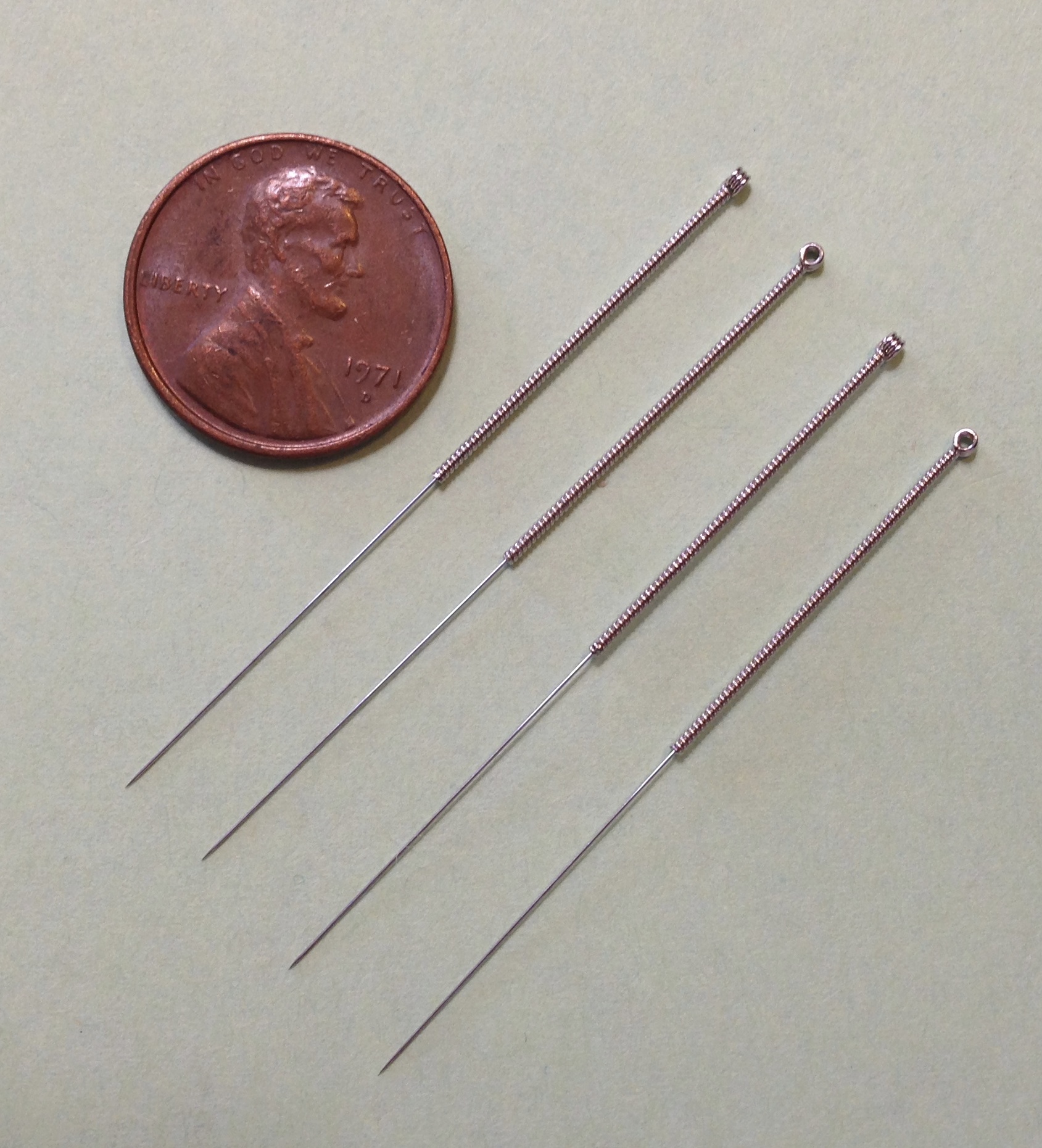
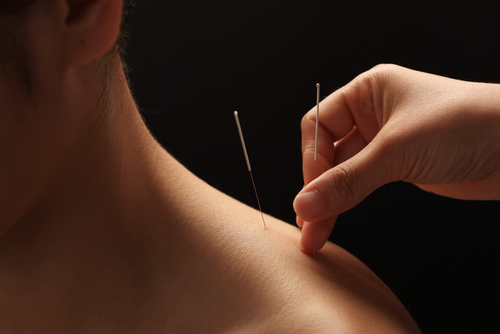
Dry needling (use of acupuncture needles or hollow-core hypodermic needles for therapy of MTrPs) is a treatment that is widely used in clinical practice by physiotherapists, but how does it compare to other available treatments?

Here’s what they did

The authors searched the following 10 databases (English and Chinese) from inception to January 2014: PubMed, EBSCO, PEDro, ScienceDirect, The Cochrane Library, ClinicalKey, Wanfang Data Chinese database, China Knowledge Resource Integrated Database, Chinese Chongqing VIP Information and SpringerLink. Studies were included if they were a randomised controlled trial (RCT) that included patients with MTrPs associated with neck and shoulder pain, and used acupuncture or dry needling as an intervention. Furthermore, pain visual analogue scale or numerical rating scale had to be the outcome measure used. No language restriction was imposed during the search.

Review authors independently screened studies by inclusion/exclusion criteria, extracted data and assessed validity of the included studies using the PEDro scale. A third reviewer adjudicated when necessary.

Here’s what they found

Twenty RCT’s involving a total of 839 patients were identified and included in the 9 meta-analyses completed.

  • Compared with control/sham, dry needling was effective in the short term (immediately to 3 days) (SMD =  -1.91; -3.10 to -0.73 95% CI; p = 0.002) and medium term (9-28 days) (SMD = -.1.07; -1.87- to -0.27 95% CI ; p = 0.009;
  • However, wet needling (e.g. local anaesthetic injection) was superior to dry needling  in relieving MTrP pain in the medium term (SMD = 1.69; 0.40 to 2.98 95% CI; p = 0.01).
  • The results for ‘other therapies’ (e.g, intramuscular stimulation, botox, physiotherapy) failed to reach enough statistical power to determine a significant change in pain when compared to dry needling.
  • There were no statistically significant effects in the long term (2 to 6 months), however only a small number of studies looked at long term outcomes.

The authors concluded

Dry needling can be recommended for relieving MTrP in neck and shoulder in the short and medium term, but wet needling is found to be more effective than dry needling in relieving MTrP in neck and shoulders in the medium term.

shutterstock_261614756
Dry needling can be recommended for relieving MTrP in neck and shoulder in the short and medium term, but wet needling is found to be more effective in the medium term.

The Musculoskeletal Elf’s view

The Musculoskeletal Elf

Firstly it is important to note that results should be treated with some caution as there was high heterogeneity between the trials, which is an inevitable effect when comparing trials with much clinical and methodological diversity. The authors tried to account for this in the statistical analysis.

When treating MTrP pain in the neck and/or shoulder pain, dry needling is a valid treatment option to use for short to medium term reduction in self reported pain. Wet needling is not a treatment modality used by physiotherapists and so the results for this are not directly applicable to our practice.

More research is needed to conclude about long term effects of dry needling for MTrP pain in the cervical spine and shoulders. In particular large-scale, multi-centred high quality RCTs with adequate follow up is recommended.

What do you think?

  • What treatment modalities do you commonly use to treat active MTrPs?
  • What are your experiences of using dry needling in clinical practice?

Send us your views on this blog and become part of the ever expanding Musculoskeletal Elf community. Post your comment below, or get in touch via social media (FacebookTwitterLinkedInGoogle+).

Do you know that there is an evidence-based minimum set of items for reporting in systematic reviews and meta-analyses? This is called the Preferred Reporting Items for Systematic Reviews and Meta-Analyses or PRISMA statement and can be accessed through the website of the EQUATOR Network. The Elves use the PRISMA statement for critical appraisal of systematic reviews, although it is not a quality assessment instrument to gauge the quality of a systematic review.

Links

Liu, L., Huang, Q. M., Liu, Q. G., Ye, G., Bo, C. Z., Chen, M. J., & Li, P. 2015, ‘Effectiveness of Dry Neeedling for Myofascial Trigger Points Associated with Neck and Shoulder Pain: A Systematic Review and Meta-analysis’ Archives of physical medicine and rehabilitation, Vol. 96, no.5, pp.944-955 [Abstract]

Add a comment
  • Jean-Philippe

    Jean-Philippe

    1 year ago
    Wow. I was just googling my own name and found out about your work. It is very similar than the PhD I've started at University of Sherbrooke (comparing wet needling to wet needling administered with a needle free gun injector) for the treatment of Neck to shoulder MTrPTs. This doctoral program will never be terminates for many reasoons. Very happy that someone did the metanalysis. If you published something don't hesitate to send it to me. Now I work as a clinician in a chronic non cancer pain Clinic near Montreal, Canada.
  • Jean-Philippe Lamb

    Jean-Philippe Lamb

    10 years ago
    Hello, I am doing actually a PhD in the health science rehab department to compare DN with needle free injecting device on the market. Do you have experience in practice with those type of device versus the conventional acupuncture DN method ? Thank you, have a great day JP LAMB, DC, DO [email protected]
  • Naomi Hambleton

    Naomi Hambleton

    10 years ago
    Naomi Hambleton liked this on Facebook.
  • Amanda Timoney Pennock

    Amanda Timoney Pennock

    11 years ago
    Amanda Timoney Pennock liked this on Facebook.
  • Aleburgost

    Aleburgost

    11 years ago
    RT @Angel_Leon_: La punción seca es efectiva a corto y medio plazo, pero menos que la infiltración miofascial https://t.co/7qhVMjmeY6 @MSK_…
  • drSainzdMurieta

    drSainzdMurieta

    11 years ago
    RT @Angel_Leon_: La punción seca es efectiva a corto y medio plazo, pero menos que la infiltración miofascial https://t.co/7qhVMjmeY6 @MSK_…
  • Tracey Shaw

    Tracey Shaw

    11 years ago
    Tracey Shaw liked this on Facebook.
  • Agudofernandez

    Agudofernandez

    11 years ago
    RT @Angel_Leon_: La punción seca es efectiva a corto y medio plazo, pero menos que la infiltración miofascial https://t.co/7qhVMjmeY6 @MSK_…
  • JavierHerraiz3

    JavierHerraiz3

    11 years ago
    RT @GoGoPhysio: Dry needling for neck and shoulder pain: http://t.co/Too5TKjAOc
  • Updates_Rehab

    Updates_Rehab

    11 years ago
    RT @Angel_Leon_: La punción seca es efectiva a corto y medio plazo, pero menos que la infiltración miofascial https://t.co/7qhVMjmeY6 @MSK_…
  • Angel_Leon_

    Angel_Leon_

    11 years ago
    La punción seca es efectiva a corto y medio plazo, pero menos que la infiltración miofascial https://t.co/7qhVMjmeY6 @MSK_Elf
  • Barbara Calabrese

    Barbara Calabrese

    11 years ago
    Barbara Calabrese liked this on Facebook.
  • HHLibService

    HHLibService

    11 years ago
    Effectiveness of dry needling Myofascial Trigger Points for neck and shoulder pain http://t.co/LLLe5TiHs4
  • Dorsetrehab

    Dorsetrehab

    11 years ago
    RT @GoGoPhysio: Dry needling for neck and shoulder pain: http://t.co/Too5TKjAOc
  • AACP_Physio

    AACP_Physio

    11 years ago
    RT @GoGoPhysio: Dry needling for neck and shoulder pain: http://t.co/Too5TKjAOc
  • @mck_inst_aust

    @mck_inst_aust

    11 years ago
    How did any of the studies reliably ASSESS for 'trigger points'? Could the fact trigger points appear to NOT reliably BE assessed contribute to the variability of results and lack of significant outcomes? How do we even know we are needling what we think we're needling?
  • PhysioInDesford

    PhysioInDesford

    11 years ago
    RT @GoGoPhysio: Dry needling for neck and shoulder pain: http://t.co/Too5TKjAOc
  • Evans055

    Evans055

    11 years ago
    RT @MSK_Elf: Effectiveness of dry needling Myofascial Trigger Points for neck and shoulder pain http://t.co/CZGBGBRpyU
  • SportsInjurySco

    SportsInjurySco

    11 years ago
    Is dry needling Myofascial Trigger Points effective for neck & shoulder pain? http://t.co/YlhCPLEYOO
  • PhysioUniverse

    PhysioUniverse

    11 years ago
    Effectiveness of dry needling Myofascial Trigger Points for neck and shoulder pain http://t.co/GNELzrlz2h http://t.co/ckfELlIdr0
  • DanHaunDC

    DanHaunDC

    11 years ago
    RT @MSK_Elf: Effectiveness of dry needling Myofascial Trigger Points for neck and shoulder pain http://t.co/CZGBGBRpyU
  • Thinking_Chiro

    Thinking_Chiro

    11 years ago
    RT @MSK_Elf: Effectiveness of dry needling Myofascial Trigger Points for neck and shoulder pain http://t.co/CZGBGBRpyU
  • GoGoPhysio

    GoGoPhysio

    11 years ago
    Dry needling for neck and shoulder pain: http://t.co/Too5TKjAOc
  • MSK_Elf

    MSK_Elf

    11 years ago
    Effectiveness of dry needling Myofascial Trigger Points for neck and shoulder pain http://t.co/CZGBGBRpyU